The Unplugged Wedding Ceremony — and What to Do With Guest Photos Right After
WeddingSnap Team
5/19/2026
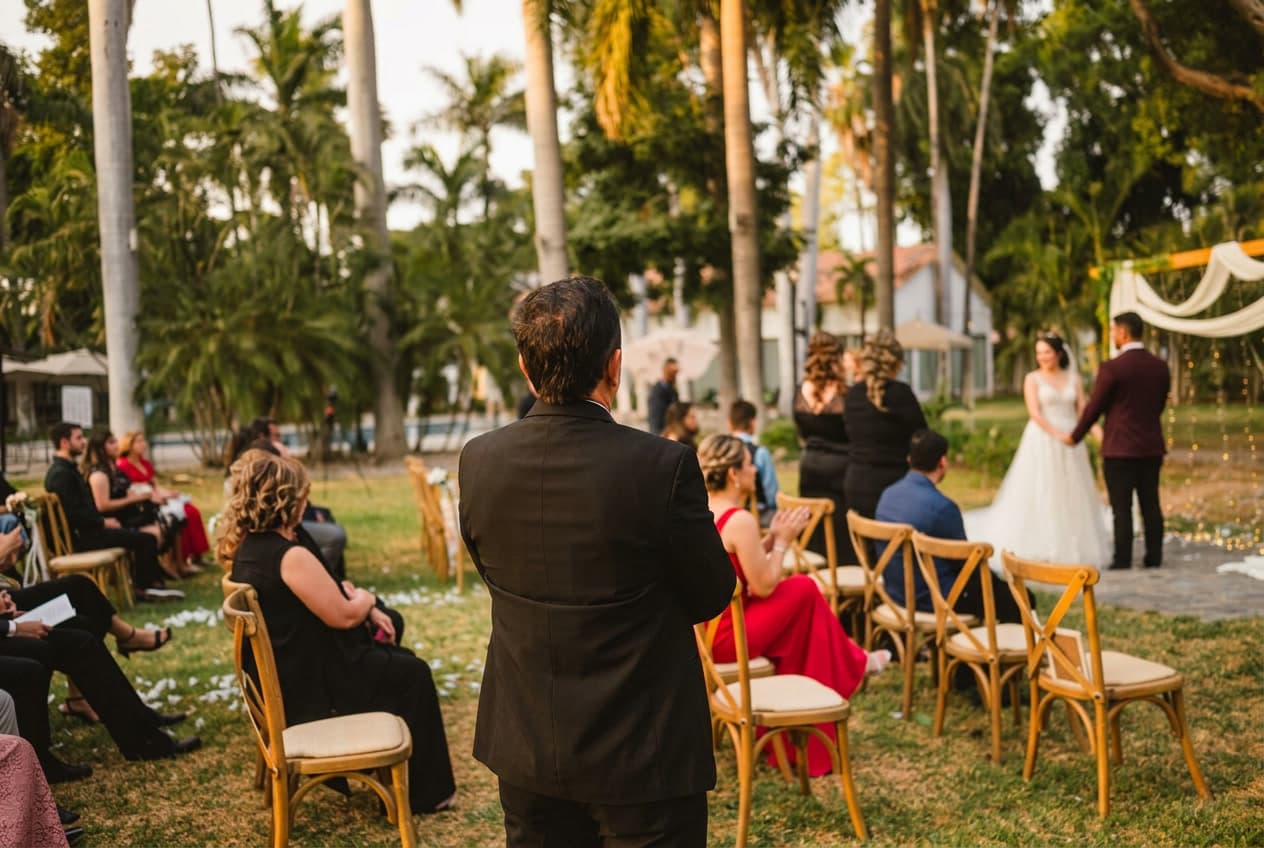
Here's something counterintuitive: the couples who collect the most guest photos from their wedding are often the ones who went unplugged during the ceremony.
That sounds backwards. If you ask guests to put their phones away, shouldn't you get fewer photos? Not if you do it right. Going unplugged for the ceremony and then putting up a wedding QR code at cocktail hour is one of the smartest moves you can make — and almost nobody talks about why it works so well.
We'll get to that. But first, let's actually talk about unplugged ceremonies — what they are, why they're gaining real momentum in 2026, and the honest case for and against them.
Why Unplugged Ceremonies Are Having a Moment
Unplugged ceremonies aren't new. Couples have been asking guests to put phones away for years. What's changed is the intensity of the conversation around them.
On Pinterest and Instagram this spring, unplugged ceremony signs are everywhere — and they're getting shareable in a way they didn't used to be. The aesthetic shifted from stiff "no photography" notices to warm, often funny handwritten signs that feel like an invitation rather than a rule. The best ones are going viral because they're clever, not because they're strict.
Meanwhile, on Reddit's r/weddingplanning, the debate is genuinely heated. Couples who had unplugged ceremonies consistently report the same thing: it felt different. Quieter. More intimate. They looked out at guests during their vows and saw faces, not screens. Some guests were crying. The moment felt like theirs.
Photographers have been advocating for this for years, and here's their real reason: a guest with a phone in the aisle doesn't just take a bad photo — they block the professional photographer's shot of the moment you're paying thousands of dollars to capture. The first kiss, the ring exchange, the moment your partner sees you for the first time. One outstretched arm with a phone can ruin it.
Our own data at WeddingSnap backs up why Saturday ceremonies carry the highest stakes: more than 6 in 10 events on our platform happen on Saturdays, making it the most photographed, highest-pressure wedding day of the week. Those are the moments worth protecting.
What an Unplugged Ceremony Actually Means
This is where a lot of couples get confused. "Unplugged" doesn't have to mean phones are banned for the entire day. It almost never does.
The standard approach — and the one that actually works — is unplugged for the ceremony only. That's typically 20 to 45 minutes. Guests put their phones away from the moment you begin walking down the aisle until the recessional. Everything before (getting ready photos, venue arrival shots) and everything after (cocktail hour, reception) is fair game.
Some couples extend it to the first dance or the first look, but that's less common. A full-day phone ban is rare and, frankly, unnecessary. It also tends to breed resentment — guests feel like they're being managed rather than invited into your celebration.
The point isn't to restrict your guests. It's to reclaim 30 minutes of ceremony as a genuinely witnessed moment, not a content-creation event.
The Real Talk: Does It Actually Work?
Mostly yes. With caveats.
The vast majority of guests will comply when the request comes from a warm, non-preachy place and is communicated clearly in advance. You'll get a few holdouts — usually one family member who decides the rule doesn't apply to them. You can't control that, and honestly, you shouldn't lose sleep over it.
What you can control is the framing. The unplugged ceremonies that go badly are the ones where the request feels condescending. Telling adults they need to "be truly present" because you've decided phones prevent that reads as preachy, and it puts people's backs up before the ceremony even starts. Some guests have written honestly about finding the request rude — the sense that they're being pre-emptively scolded for something they hadn't done yet.
The fix is tone. Lead with what you're giving your guests (a photographer who's capturing everything so they don't have to), not what you're taking from them (their phones).
There's also a practical question worth asking: what are you actually gaining? If you have a great photographer, you're protecting their ability to do their job. If you're working with a smaller budget or doing a more DIY approach to photography, an unplugged ceremony might matter less — in that case, more wedding guest photo ideas might serve you better than a restriction.
How to Word Your Unplugged Ceremony Sign
The sign is everything. Get the wording right and guests comply cheerfully. Get it wrong and you start the ceremony on a sour note.
Here are five wording options that actually work, ranging from formal to funny:
The warm and direct:
"We've hired a photographer to capture how this moment looks. Please capture how it feels — phones away for the ceremony."
The simple and honest:
"Ceremony: phones down, hearts open.
Reception: share everything."
The photographer-forward:
"Our photographer has this covered. Give your eyes — and your heart — a break from the screen for the next 30 minutes."
The playful:
"We only ask one thing: be here. You can Instagram us at the reception — we'll even set up a photo station."
The poem (for more traditional ceremonies):
"We invite you to be our witnesses today,
not our documentarians.
Our photographer will capture the frame.
We ask you to hold the feeling."
Notice what all of these have in common: they explain the reason, they're brief, and they don't lecture. None of them use the word "please" three times or remind guests what a phone is.
Where to Display the Sign (and What Else to Say)
A sign at the ceremony entrance is good. A sign at the ceremony entrance plus two other touchpoints is what actually works.
The three-point approach:
- Ceremony entrance sign — guests see it as they walk in and get seated. Give it prime real estate, not a small card tucked in a corner.
- Wedding program — a single line in the program reminds guests right before things start. Keep it brief: "We're asking for an unplugged ceremony — your full presence is the best gift."
- Officiant announcement — have your officiant mention it warmly at the start, before the processional begins. This is the most effective of the three because it's verbal, it's immediate, and it comes from the person running the room. Something like: "Before we begin, [Name] and [Name] have one request — phones away for the next half hour. They have a photographer here to capture the moments. They're asking you to capture the feeling."
You don't need all three every time, but the officiant announcement alone has the highest compliance rate. If you do nothing else, do that.
For sign design, check out free ceremony sign templates — having a well-designed sign matters as much as the wording, because guests who see a polished, intentional sign take the request more seriously than a handwritten Post-it.
The Flip Side: What Do You Do With Guest Photos After?
This is the part no other article is talking about, and it's the actual insight worth sharing.
Here's what happens at most weddings without a plan: guests take photos all day long on their personal phones, post a few to Instagram with your hashtag, and then those photos live in their camera rolls forever. You maybe get 10-15 of them texted to you over the following weeks, usually compressed to oblivion. The rest disappear.
Now here's what happens when couples combine an unplugged ceremony with a QR code photo station at cocktail hour:
Guests arrive at cocktail hour with a phone full of photos they've been mentally hoarding — getting-ready shots, venue arrival, pre-ceremony candids, and all the post-ceremony moments. They're in a good mood. They're social. They see a sign that says something like "Share your photos — scan to upload" with a QR code. And they do it, because they've been waiting for exactly this moment.
The psychology is real: asking guests to hold off on sharing for 30 minutes doesn't suppress the impulse — it builds it. By the time cocktail hour hits, that sharing impulse has been sitting in a pressure cooker. A QR code for wedding pictures at cocktail hour gives it the perfect release valve.
We see this pattern consistently in our data. Couples who set up a WeddingSnap QR code photo station see dramatically higher guest participation at cocktail hour than those who just use a hashtag and hope for the best. The QR code gives guests a specific, frictionless action — scan, upload, done — instead of asking them to navigate Instagram settings and remember a hashtag they saw on a card three hours ago.
The counterintuitive truth: couples who go unplugged during the ceremony and then set up a photo collection station afterward end up with more guest photos, not fewer. The ceremony restriction channels the energy forward rather than killing it.
This is also the answer to the guests who push back on unplugged ceremonies because they want to capture memories. You're not taking away their ability to capture the day — you're just asking them to wait 30 minutes. That's a much easier ask when you can point to the QR code sign and say "and we've made it really easy to share everything when the ceremony is done."
For more ways to think about this, our guide on wedding guest photo ideas covers everything from photo prompts to scavenger hunts — ways to make guests feel like active participants in documenting your day rather than passive rule-followers.
Setting Up the Cocktail Hour QR Code
The logistics are simple. You create a WeddingSnap event, get a unique QR code, print it on a sign or table card, and place it at cocktail hour. Guests scan, upload, and you see everything in a shared album in real time — from your phone, between toasts, whenever you want to peek.
The sign placement matters. Cocktail hour bars and appetizer stations are your best locations — guests are standing, socializing, and naturally looking around. A sign at eye level near where drinks are served gets scanned far more than one tucked in a corner by the seating chart.
If you want to extend it through the reception, that works too. Some couples put QR codes at each table as part of the centerpiece design — guests have something to do between courses, and you end up with a gallery of candid table shots that your photographer was never going to capture anyway.
After the ceremony comes cocktail hour — that's when you put up a QR code sign and watch the photos roll in. Grab a free sign template →
The Bridal Shower Parallel
One thing worth mentioning: the same logic applies to pre-wedding events. If you're planning a bridal shower or engagement party, bridal shower QR code setups follow the same pattern — give guests an easy way to share, and they will. It's also good practice for the main event; you'll know exactly what sign wording, placement, and instructions work best for your specific crowd before the wedding day.
The Bottom Line
Unplugged ceremonies work. They produce better professional photos, more emotionally present guests, and a ceremony that feels like a ceremony rather than a content shoot. The execution matters — tone, placement, and a warm officiant announcement will carry you most of the way there.
But the real move is what happens right after. An unplugged ceremony without a plan for guest photos is a missed opportunity. Pair it with a QR code station at cocktail hour and you've solved both problems at once: your ceremony photos are clean, and your guest photo collection is bigger than it would have been if you'd let everyone shoot during the vows.
The couples who understand this end up with the best of both worlds. That's the whole point.
After the ceremony comes cocktail hour — that's when you put up a QR code sign and watch the photos roll in. Grab a free QR code sign template →
Frequently Asked Questions
Should I have an unplugged wedding ceremony?
Yes, for most couples. An unplugged ceremony produces cleaner professional photos, more emotionally present guests, and a quieter atmosphere during your vows. The key is pairing it with a QR code photo station at cocktail hour so guests can share everything they captured before and after — you end up with more total guest photos, not fewer.
How do I word an unplugged ceremony sign?
Warm and brief beats formal and lengthy every time. Our favorite: "We've hired a photographer to capture how this looks — please capture how it feels. Phones away for the ceremony." Avoid anything that sounds like a corporate policy. The goal is to make guests feel invited to be present, not scolded for owning a smartphone.
What do I do with guest photos if the ceremony is unplugged?
Set up a QR code for wedding pictures at cocktail hour. Guests can scan and upload everything they captured — pre-ceremony, cocktail hour, reception. The unplugged ceremony actually builds the sharing impulse rather than killing it, so by the time your QR code sign goes up, guests are ready and willing to share.
Will guests actually comply with an unplugged ceremony request?
Most will, especially with three-point communication: a sign at the ceremony entrance, a note in your program, and an officiant announcement at the start. A small handful may sneak a photo. That's acceptable. What matters is that the majority of your guests are looking at you — not their screens — when you exchange vows.