Super 8 Wedding Video: Real Film vs. the Look, and the Cost
WeddingSnap Team
11/24/2026
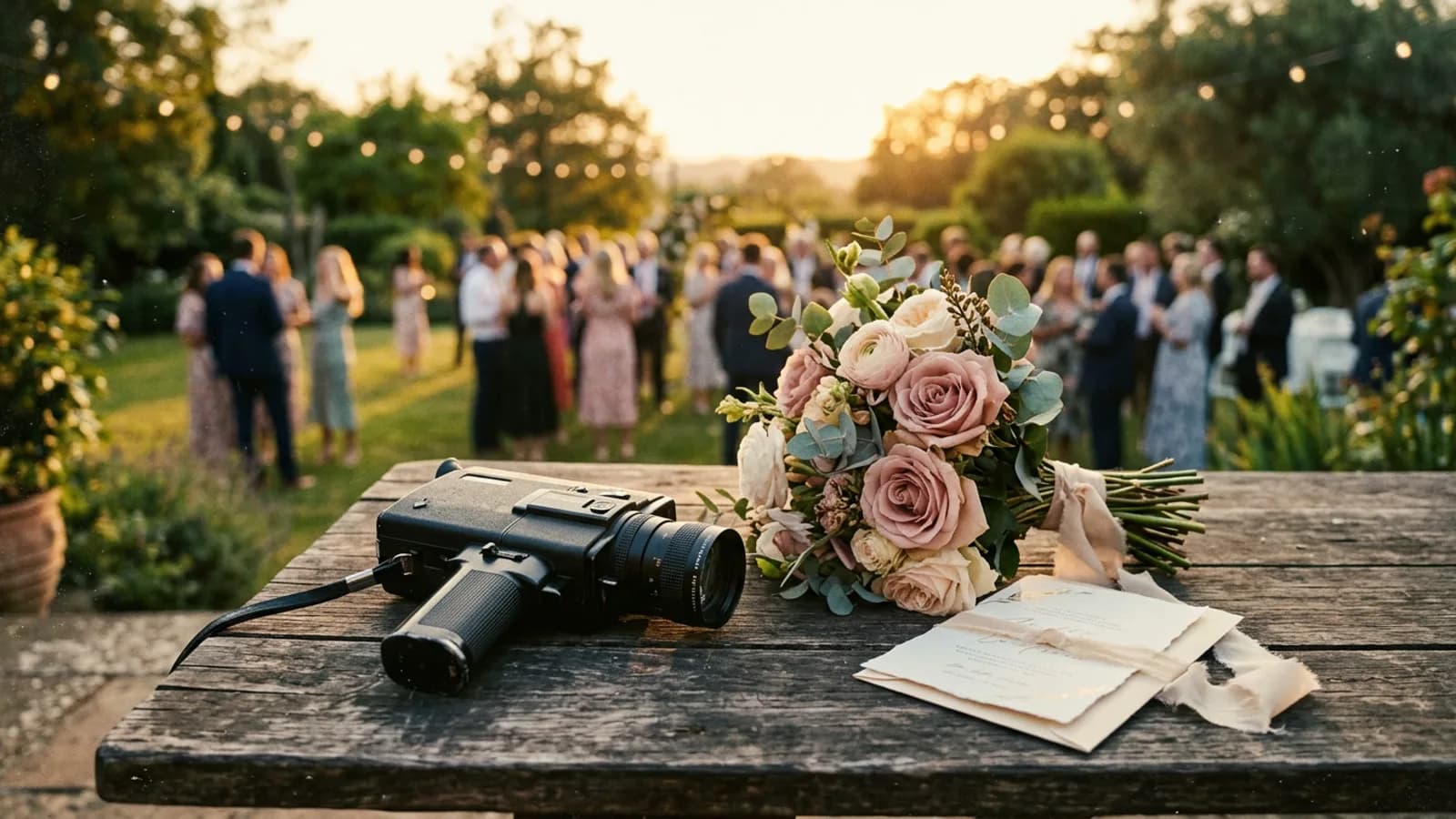
Search for a Super 8 wedding video and you get a wall of beautiful portfolio clips: warm grain, light leaks, a veil catching the sun. What you don't get is the practical part. How much film does a wedding use? What does each cartridge cost to buy, develop and scan? Why is there no sound? And can you get the same look without real film? This guide answers those questions with prices we read on labs' and videographers' own pages on November 24, 2026.
The short answer
- Real Super 8 is real film. Kodak introduced the format in 1965 and still makes the stock. Each 50-foot cartridge gives you about 2.5 minutes at 24 frames per second, or about 3 minutes 20 seconds at 18.
- It's silent. Kodak stopped making Super 8 sound film in 1997. Three of the four Super 8 wedding filmmakers we checked say plainly that they record no audio.
- Each cartridge costs about $108 all in at one US lab (film, developing and a basic scan), before you've bought or rented a camera.
- Hiring a Super 8 videographer costs roughly $2,500 to $8,500 on the listings we found, depending on hours and how many rolls they shoot.
- The look without the film comes from digital cameras built to shoot warm, grainy, home-movie footage onto a memory card. Cheaper and easier, but it isn't film, and anyone who tells you otherwise is selling something.
- If you want the speeches and vows with sound, real Super 8 can't do it. Pair it with a digital camera, or pick a camcorder.
What Super 8 actually is
Super 8 is a home-movie film format. Kodak's own history page says it launched in the spring of 1965 as a complete system of film, cameras and projectors. The big idea was the cartridge: you drop it in the camera, and the whole 50 feet can be shot without threading anything.
The frame is tiny. Kodak puts the image area at 4.01 × 5.79 mm, smaller than a fingernail. That small frame, blown up to fill a TV, is where the famous grain and softness come from. It is not a filter. It's the film.
Kodak still sells Super 8 cartridges in five stocks: VISION3 50D, 200T and 500T color negative, EKTACHROME 100D color reversal, and TRI-X black-and-white reversal. The number is roughly the film speed, and "D" or "T" means balanced for daylight or tungsten (indoor) light.
Sound is the catch. Kodak added a magnetic sound stripe to Super 8 in 1973, but discontinued sound film in 1997. Today's cartridges are silent. Every Super 8 wedding film you've seen with vows audible had its audio recorded separately on a digital device and synced in the edit, or simply set to music.
What real Super 8 wedding film costs
The film itself: about $108 a cartridge, all in
Pro8mm, a long-running Super 8 lab and camera shop, sells Kodak stock in packages that bundle the film, developing and a scan. On November 24, 2026, its 50D, 200T and 500T Super 8 packages were each listed at:
| Per 50-ft cartridge | Listed price |
|---|---|
| Film + processing + basic scan | $108 |
| Film + processing + production scan | $127 |
| Film + processing + advanced scan | $152 |
| Processing + basic scan only (you bought the film elsewhere) | $66 |
Prices from Pro8mm's product pages, November 24, 2026. Shipping to the lab is extra. Prices change, so check before you order.
A Super 8 videographer: about $2,500 to $8,500
Here's what four Super 8 wedding filmmakers list on their own pages or Zola profiles:
- A New England filmmaker prices it à la carte: $1,500 for up to 8 hours on the day, $250 per roll (about 3 minutes each, developing and scanning included) and $400 per minute of edited film. "No audio is captured."
- A South Carolina studio on Zola lists Super 8 packages from $3,750 (3 hours, 1–2 rolls, a 3–4 minute film) to $8,500 (9 hours, 6–8 rolls, a 6–8 minute film).
- A Big Sur, California filmmaker on Zola lists $2,500 for a 2-hour weekday elopement up to $6,500 for 6 hours and a 10–12 minute film, and says "My cameras do not have audio recording capabilities."
- A New Jersey studio on Zola lists a Super 8-only package at $6,000–$8,000 peak, with a minimum of 2 rolls and no audio recording.
That's more than a lot of digital videographers charge for a full day, and you get less footage and no sound. You're paying for the medium, a specialist's skill with an unforgiving camera, and the per-roll lab costs. If you're comparing against a standard videographer, our breakdown of wedding videographer costs vs. a camcorder kit has the digital numbers.
How many minutes of film do you actually need?
Less than you'd think. Pro8mm's wedding guide says a good Super 8 shot lasts about 10 seconds, so one 2.5-minute cartridge holds roughly 15 shots. Here's a realistic plan for a full wedding day at 24 frames per second:
| Part of the day | Cartridges | What you get |
|---|---|---|
| Getting ready | 1 | About 15 short shots: dress, buttons, window light, friends laughing |
| Ceremony | 1–2 | Processional, the kiss, the walk out. Not the whole ceremony. |
| Portraits and cocktail hour | 1 | Golden-hour walking shots, guests mingling outside |
| Reception | 2 | Entrance, first dance, a few seconds of each toast, the dance floor, the exit |
| Total | 5–6 | 12.5–15 minutes of raw film |
That lines up with what the pros shoot. The South Carolina studio above uses 4–6 rolls for a 7-hour day and cuts it to a 5–6 minute film.
What that costs, two ways:
- DIY: 6 cartridges × $108 = $648 for film, developing and scans. Add a camera. Pro8mm rents a basic Super 8 camera from $125 for a single day. Call it around $775 plus shipping, and you edit it yourself.
- Hired, à la carte: using the New England rates, $1,500 for the day + 6 rolls × $250 + a 5-minute edit at $400 a minute = $5,000.
Do the math before you fall for "it's only film." Most of the cost of real Super 8 is the person who knows how to expose it.
Three ways to get a Super 8 wedding video (plus the camcorder)
| Super 8 videographer | DIY real Super 8 | Super 8-style digital camera | 4K camcorder | |
|---|---|---|---|---|
| Is it real film? | Yes | Yes | No. Digital video with a film look, recorded to a memory card | No. Sharp, modern video |
| Typical cost | ~$2,500–$8,500 | ~$108 per cartridge + camera; ~$775 for 6 carts and a 1-day rental | Buy one, or rent with an edit included ($699 with ours) | Buy one, or rent with an edit included ($699 with ours) |
| Footage | 2.5–3.3 min per roll, a few rolls | As many cartridges as you pay for | Hours | Hours |
| Sound | None from the film camera | None | Not what it's for. Pick the camcorder if speeches matter | Yes, clear sound |
| Low light | Limited; pros bring lights or fast stock | Limited; dark receptions can come back murky | Grain is part of the look | Strong (ours has a bright f/1.8 lens) |
| Who films | A professional | You or one practiced friend | Anyone: point and press | Anyone |
| Can you see it before it's developed? | No | No. Lab turnaround on top | Yes. No screen, but it's on the card straight away | Yes, on the flip-out screen |
| Best for | Couples who want true film and have the budget | Film nerds who'll practice first | The look, passed around by guests, without the risk | Hearing the vows and toasts again |
Our honest take: if you've watched a real Super 8 wedding film and cried, and you have $3,000+ to spend on it, hire a Super 8 specialist. Nothing digital looks exactly like it, and a pro knows how to expose a dark room. If you just love the vibe and want the whole weekend covered, real film is the expensive way to get a few minutes of it.
Full disclosure: we run a wedding camcorder rental. You can choose a vintage-look Super 8-style camera instead of the camcorder. To be clear, it is not a film camera. It records warm, grainy, 70s-home-movie footage to a memory card, with five built-in film looks including black and white, an 8x zoom and no screen. Guests point it and pull the trigger. There are no cartridges to buy and no lab. Our editors cut a 4–6 minute film from the camera footage plus your guests' phone footage. For what that kind of rental generally involves, see our guide to how wedding camcorder rental works.
If the toasts matter more than the grain, the same rental comes with a 4K camcorder instead: 24x zoom, clear sound, a flip-out screen. That's the right choice for a home-video feel you can actually hear. Our posts on the 90s wedding video look and choosing a camcorder for a wedding go deeper on that side.
Tips for filming a wedding on real Super 8
Light
- Daylight is your friend. Getting ready by a big window, an outdoor ceremony and golden-hour portraits are where Super 8 looks best.
- Use the fastest stock for the reception. Kodak's VISION3 500T is its highest-speed color Super 8 stock, and Pro8mm's wedding guide recommends it for weddings. Even so, a candlelit room will come back dark and muddy.
- Find the light at night. Shoot the first dance under the brightest fixture, near the band's stage lights or during sparklers. If you're hiring, ask whether the filmmaker brings a light.
- Not every camera reads every film speed. Have the lab or the camera seller confirm your camera exposes the stock you're buying correctly. Pro8mm even sells a cartridge-and-camera analysis service.
Cartridge changes
- Load a fresh cartridge right before the processional. Two and a half minutes goes fast, and the camera will run out mid-vows if you start half-used.
- Keep spares in a pocket, not a bag across the room. Swapping a cartridge takes seconds, if you have one on you.
- Label used cartridges as you go ("1 – getting ready") so the lab scans them in order.
- Don't film the whole ceremony. Shoot the walk in, the kiss and the walk out. Let a phone or a digital camera record the full vows with sound.
Who holds it
- One person, with practice. Real film punishes guesswork. Give the camera to a friend who has shot at least one test cartridge before the day and seen it come back from the lab.
- Passing it around works with strict rules. Pro8mm suggests guests shoot about 15 seconds each, then hand it on. Without that rule, one uncle will burn a whole cartridge on the cake.
- Ten-second shots, then stop. Short bursts give an editor more to work with than one long take.
For who should hold a digital camera and when, our post on the guest camcorder trend has shot ideas that work just as well for a Super 8-style camera. And if voices are the thing you'll miss, an audio guest book collects spoken messages from guests, which silent film never will.
Want the Super 8 look without buying film?
Our wedding camcorder rental comes with your choice of a vintage-look Super 8-style camera (digital, not film) or a 4K camcorder. $699 for one camera, $949 for two, shipping both ways included, US only. Your guests film the weekend, and we edit their footage and their phone videos into one film, plus 3 vertical videos in 2–7 days.
FAQ
How much does a Super 8 wedding video cost?
On the listings we checked in November 2026, hiring a Super 8 wedding filmmaker costs roughly $2,500 for a short elopement up to $8,500 for a 9-hour day. Doing it yourself costs about $108 per 50-foot cartridge for film, developing and a basic scan at one US lab, plus a camera.
How long is a Super 8 cartridge?
A 50-foot cartridge runs about 2.5 minutes at 24 frames per second, or about 3 minutes 20 seconds at 18 frames per second. A full wedding day usually uses 4 to 6 cartridges.
Does Super 8 wedding film have sound?
No. Kodak discontinued Super 8 sound film in 1997, so today's cartridges are silent. Filmmakers either set the film to music or record audio separately on a digital device and sync it in the edit.
Is Super 8 still made?
Yes. Kodak still lists Super 8 cartridges in VISION3 50D, 200T and 500T color negative, EKTACHROME 100D color reversal and TRI-X black-and-white reversal.
What's the difference between real Super 8 and a Super 8-style camera?
Real Super 8 exposes film that has to be developed and scanned at a lab, and each cartridge holds about 2.5 minutes. A Super 8-style camera is a digital video camera that records a film-like look to a memory card, so you can shoot for hours with no lab costs. It looks similar on a phone screen, but it isn't film.
Super 8 or camcorder for a wedding?
Pick Super 8 (or a Super 8-style camera) for a dreamy, silent, home-movie feel set to music. Pick a camcorder if you want to hear the vows and speeches and see the day sharply.
Sources
- Kodak — Super 8 History: introduced spring 1965, 50-foot cartridge, sound stripe added 1973. Read November 24, 2026.
- Kodak — Super 8 Films: current stocks (VISION3 50D, 200T, 500T; EKTACHROME 100D; TRI-X). Read November 24, 2026.
- Kodak support — Super 8 vs. 8mm: 4.01 × 5.79 mm image area.
- Wikipedia — Super 8 film: 2.5 minutes at 24 fps, 3.33 minutes at 18 fps; sound film discontinued 1997.
- Pro8mm — Super 8 film packages and process and scan: per-cartridge prices. Read November 24, 2026.
- Pro8mm — shooting weddings on Super 8 (2011): 10-second shots, 500T recommendation. Pro8mm — guests shooting Super 8 (2016): 15-second clips per guest.
- New England Super 8 filmmaker — pricing; Zola listings for a South Carolina studio, a Big Sur filmmaker and a New Jersey studio. Read November 24, 2026.
- WeddingSnap Camcorder Rental: prices and camera details, verified November 24, 2026.
Related reading: wedding camcorder rental, explained, how to get a 90s wedding video, and digital disposable cameras for weddings.