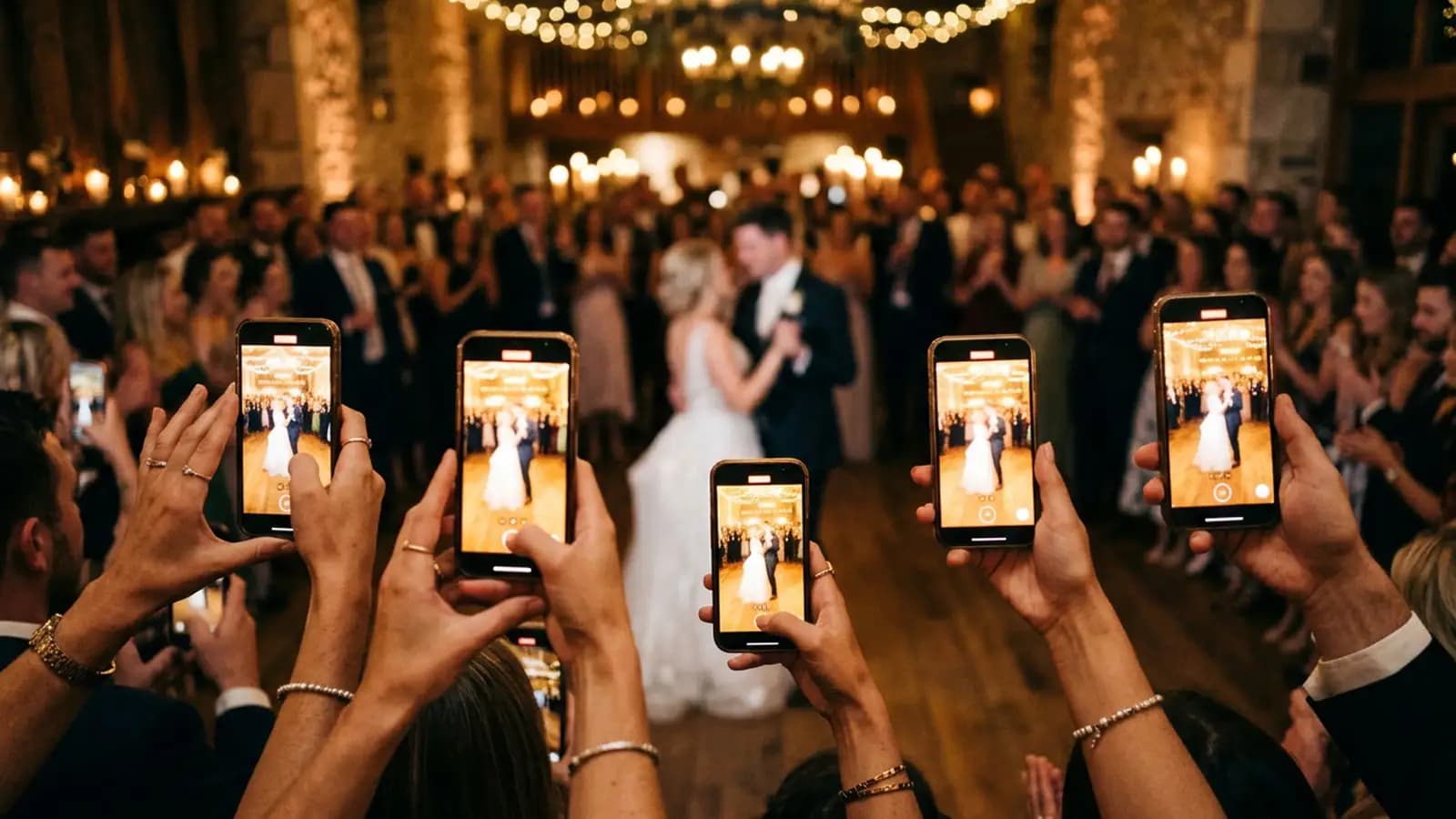
The average couple now pays about $3,000 for a wedding photographer, and Zola's marketplace data puts the typical range at $3,500 to $5,300. If that number doesn't fit your budget, you have more options than "hire someone cheap" or "hope the photos happen." Some of them are genuinely good. A couple of them are traps.
Quick disclosure before we start: we make WeddingSnap, a $39.99 QR code that collects your guests' photos and videos. It appears on this list, and we'll be honest about what it is not. It is not a photographer. Nothing on this list fully is. The point of this guide is to help you spend whatever you have where it matters most.
The short answer
- If you can stretch to $900 to $1,500: book a real photographer for two to four hours instead of a full day. Cutting hours beats cutting quality every time.
- If you have $300 to $900: a wedding content creator for a half day, or a one-hour portrait session, plus a guest photo QR code for everything else.
- If you have under $100: a guest photo QR code and a friend on portrait duty for twenty minutes at golden hour. Skip the disposable cameras; they cost more than you think and deliver less.
- Whatever you choose: collect your guests' photos. They are already taking hundreds of them. On our platform a typical 100-guest wedding collects around 630 guest photos, and that number is free to capture if you make it easy.
What a photographer actually gives you, and what you lose without one
Before you cut the line item, it helps to know what it buys. A professional brings lighting for dark receptions, backup camera bodies, a plan for the family formals, the instinct to be in the right spot when the rings come out, and roughly 30 hours of editing after the day. That is why the low end of the market still starts around $1,200.
The failure mode people regret is not "we had no photographer." It is "we hired someone cheap who didn't deliver." One bride who wrote about taking the budget route on the wedding blog Every Last Detail got mostly unedited images from a 12-hour package and describes the result as heartbreaking years later. The WeddingWire forum thread on photographer alternatives says the same thing in a dozen voices: nearly everyone who skipped a pro or hired an unvetted amateur warns you about lighting, focus and the pictures you can't retake.
So here is the rule we'd give a friend: if there is any way to afford a good photographer for fewer hours, do that first. Then use the alternatives below to cover the hours you didn't book. If there is no way, the rest of this guide is for you, and it can still turn out well.
9 alternatives to a wedding photographer, with real prices
Prices below are from published 2026 sources and vendor pricing pages we checked in September 2026. Local prices vary, so treat them as ranges, not quotes.
1. A professional for fewer hours
Cost: about $700 to $1,500. Small-wedding packages, sold as elopement, courthouse or micro-wedding coverage, typically run $700 to $1,200 for one photographer, two to three hours, and edited digital files. Early-career photographers with one to three years of experience charge roughly $1,200 to $2,500 for longer coverage. Booking platforms have pushed prices down too: Lily & Lime lists packages from $895 across 42 US cities.
What you get: the ceremony, the portraits and the first hour of the reception shot by someone who does this every weekend, with real editing.
What it misses: the last four hours of the party. That is exactly what your guests are good at photographing, which is why this pairs so well with option 6.
Best for: almost everyone reading this. Our full breakdown of what a wedding photographer costs covers how to negotiate hours.
2. An early-career or student photographer
Cost: $300 to $1,500. Entry-level photographers charge $150 to $200 an hour, against $400 to $600 for established ones. Photography students and portfolio-builders often go lower, sometimes to a few hundred dollars for a full day.
What you get: a dedicated person with a real camera, and often a lot of enthusiasm.
What it misses: experience with dark rooms, fast-moving moments and difficult family members. Vet them properly: ask for one complete wedding gallery, not a highlight reel, and confirm they shoot with two camera bodies and back up cards the same night. Put it in a short written agreement.
Best for: couples with a relaxed, well-lit daytime wedding and a high tolerance for a few misses.
3. A wedding content creator
Cost: $500 to $999 for a typical booking, according to Zola's 2026 wedding spend survey, with full-day local packages at $1,200 to $2,800.
What you get: phone-shot video and candid photos, usually delivered within a day or two, edited for social media. Content creators have gone from novelty to one of the most requested vendor categories on Zola in about two years, and for a lot of couples the vertical video of the first dance matters more than a formal album.
What it misses: the posed portraits and the technical quality of a full-frame camera in low light. A content creator is not a photographer, and most of them will tell you that.
Best for: couples who care about video and social-ready clips more than prints. We wrote a separate guide to hiring a wedding content creator.
4. A one-hour portrait session on the day
Cost: $300 to $600. Travel-photography services like Flytographer start at $325 for 30 minutes, and plenty of local photographers offer one-hour "mini" sessions in the same range.
What you get: the twenty or thirty portraits you will actually frame, shot by a pro in good light.
What it misses: everything that isn't a portrait: the ceremony, the toasts, the dancing.
Best for: small weddings where the ceremony and party will be covered by guests, and you just want the two of you photographed properly.
5. A post-wedding session instead of day-of coverage
Cost: $300 to $800. A day-after or first-anniversary session with a pro costs a fraction of wedding-day rates because it is one to two hours with no timeline pressure.
What you get: calm, beautiful portraits in your wedding clothes, at a location you choose, with time for retakes.
What it misses: the actual day. You are trading documentary coverage for portrait quality.
Best for: couples who want one set of gorgeous pictures and are happy to let guests document the party itself.
6. A guest photo QR code
Cost: $39.99 one time for WeddingSnap, or from $74.99 with printed table cards and signs shipped to you. Other apps in this category run from free tiers with tight limits to about $120; we compared all of them in our guide to the best wedding photo sharing apps.
What you get: a QR code on every table. Guests scan it with their phone camera, the upload page opens in the browser, and their photos and videos land in one private gallery. No app, no account. On our platform that adds up to roughly 630 photos at a 100-guest wedding, about seven per guest, in full original quality. You can run the gallery as a live slideshow on a TV at the reception, collect voice messages from guests, and download everything as one ZIP for a year.
What it misses: nobody is directing the shots. Coverage depends on where your guests are standing and whether they remember to scan. The ceremony in particular tends to be under-photographed by guests, because they are busy watching it. A QR code is a layer, not a photographer.
The $0 version: a shared Google Photos album and a hashtag. Both work, both leak. Guests need a Google account to add to a shared album, and any guest with a private Instagram account can tag every photo without you ever seeing one. We covered the details in our post on wedding hashtag alternatives.
Best for: every wedding on this list, as the layer under whichever option you pick above it.
See what a guest photo gallery looks like before you decide.
The live demo is the real upload page your guests would see. If you like it, setting up your own QR code takes about two minutes and costs $39.99 once, with a 30-day money-back guarantee.
7. Disposable cameras on the tables
Cost: $300 to $700 for a 100-guest wedding, all in. Cameras run $12 to $18 each, and developing adds about $13 to $18 per camera at big-box photo counters, with a one-to-three-week wait. Ten tables means ten cameras, 270 exposures, and around $250 to $360 before you have seen a single frame.
What you get: a nostalgic grain that people genuinely love, and a fun activity for the tables.
What it misses: a lot. Flash misfires, thumbs over lenses, dark reception shots and a surprising number of frames of the ceiling. No video, no instant sharing, and you pay to develop the blanks. Our side-by-side of QR codes vs disposable cameras goes through the numbers.
Best for: the look, as a small extra. Not as the main plan.
8. A photo booth, rented or DIY
Cost: $700 to $1,500 for a three-to-four-hour rental with an attendant and prints, according to 2026 rental pricing from Event Brothers. A DIY booth with an iPad, a tripod, a ring light and a backdrop lands around $100 to $300.
What you get: fun, posed, well-lit group photos that guests take home, and a reliable stream of pictures from the one spot in the room with good light.
What it misses: everything outside the booth. It documents guests, not the wedding.
Best for: receptions where entertainment matters as much as coverage. We built a guide to a DIY wedding photo booth that works with a phone.
9. A friend with a real camera
Cost: free to about $500, and you should offer to pay something.
What you get: someone who knows you, knows the guests, and can be trusted with the shot list.
What it misses: their evening. A friend who is shooting is not dancing, eating or toasting. Set expectations: give them a written list of the twelve photos you cannot live without, ask them to shoot RAW and back up that night, and release them from duty once the first dance is done.
Best for: couples who have a genuinely skilled friend and would rather have imperfect photos from someone who loves them than none at all.
The nine options side by side
| Option | 2026 cost | Covers | Misses | Video? |
|---|---|---|---|---|
| Pro, fewer hours | $700 to $1,500 | Ceremony, portraits, early reception | Late reception | Usually extra |
| Early-career photographer | $300 to $1,500 | Whole day | Consistency in hard light | Sometimes |
| Content creator | $500 to $999 typical | Candids, social video | Formal portraits, print quality | Yes, the main point |
| One-hour portrait session | $300 to $600 | Portraits | Ceremony and reception | No |
| Post-wedding session | $300 to $800 | Portraits, no time pressure | The day itself | No |
| Guest photo QR code | $39.99 once | Everything guests see, all day | Directed shots, ceremony detail | Yes, unlimited |
| Disposable cameras | $300 to $700 incl. developing | Table candids | Dark rooms, blanks, 3-week wait | No |
| Photo booth | $700 to $1,500 rental, $100 to $300 DIY | Posed group shots | Everything outside the booth | Some booths |
| Friend with a camera | $0 to $500 | Whatever you brief | Their evening, editing | If they own the gear |
Ranges from The Knot, Zola, vendor pricing pages and 2026 rental guides, checked September 2026. Your city will differ.
Three budgets, three plans
Under $200. A guest photo QR code ($39.99), printed on the free sign templates at home. Ask the most camera-confident friend to take twenty minutes of portraits at sunset, and put a two-line shot list on the head table. Tell guests at the start of the reception that there is no photographer and that their photos are the album. You'll be surprised how seriously they take it.
$200 to $1,000. Everything above, plus either a one-hour portrait session or a half-day content creator. Spend the portrait hour on the ceremony and the family formals, because those are the shots guests never get right.
$1,000 to $2,000. A professional for three to four hours covering getting ready, the ceremony and portraits, then let guests take over at the reception through the QR code. This is the plan we'd pick ourselves. You get the pictures that need a pro from a pro, and the pictures that need to be everywhere at once from everyone.
If you go without a pro: 7 things that prevent regret
- Name a photo captain. One person, not "everyone," is responsible for the twelve must-have shots. Give them the list on paper.
- Get the ceremony light right. Phones struggle in dim rooms. A ceremony outdoors, or near windows, an hour or two before sunset, fixes more photo problems than any app.
- Ask for phones down during the vows, and up right after. An unplugged ceremony keeps the aisle clear; the recessional and the exit are when you want every phone raised.
- Put the QR code in three places. Tables, the bar and the restroom mirror. Scans go up sharply when the code is where people are already holding their phones.
- Give guests prompts. "Take a photo of the couple with someone who flew in" gets you pictures you'd never think to ask for. We keep a list of wedding photo prompts for guests.
- Brief the guests who own real cameras. Two of your guests probably shoot as a hobby. Ask them, kindly and in advance, to cover the toasts and the cake.
- Download and back up within the month. Every gallery has an expiry, ours included. Pull the ZIP, copy it to two places, and order prints while you're still excited about them.
A short guide to wedding photography tips for guests is worth sending with the invitation if your guests are your photographers.
Free QR code sign templates
If you're going the guest-photo route, we made 24 print-ready table card and sign designs you can download and print at home. Browse the free templates.
Frequently asked questions
Is it okay not to have a wedding photographer?
Yes. Plenty of couples marry at a courthouse, at home or on a beach with no professional in sight and have photos they love. The couples who regret it are usually the ones who had no plan at all, or who hired someone unvetted at a bargain price. If you skip the pro, replace them with a plan: a portrait slot, a photo captain and a way to collect what guests shoot.
What is the cheapest way to get wedding photos?
A guest photo QR code at $39.99 plus a friend on portrait duty is the cheapest plan that reliably produces an album. A free shared Google Photos album costs nothing but requires every guest to sign in to Google, which loses a meaningful share of uploads at the reception.
How much does a cheap wedding photographer cost?
Entry-level and elopement packages start around $700 to $1,200 for two to three hours in 2026, and early-career photographers charge $1,200 to $2,500 for longer days. Below about $700 you are usually looking at students or hobbyists, which can work, but vet a full gallery first.
Are disposable cameras cheaper than a QR code?
No. Ten disposable cameras plus developing costs $250 to $360 and gives you 270 frames, a third of which will be unusable. A QR code costs $39.99 and collects unlimited photos and videos in full quality with nothing to develop.
Can guests really take good enough wedding photos?
For the reception, yes. Modern phones handle daylight and reasonably lit rooms well, and guests are everywhere at once, which no photographer can be. For the ceremony and formal portraits, guests are a weak substitute, which is why we suggest spending whatever budget you have on a pro for exactly those hours.
Whatever you decide, collect the guest photos.
One QR code, no app for guests, unlimited photos and videos, a live slideshow and voice messages, for $39.99 once. Get your wedding QR code or try the live demo first.
Sources
- The Knot: average wedding photographer cost (Real Weddings Study)
- Zola: what couples really pay for a wedding photographer
- Zola: wedding content creators, what they do and what they cost
- Fash: 2026 wedding photographer prices and hourly rates
- Lily & Lime pricing and Flytographer pricing
- Event Brothers: photo booth rental cost in 2026
- Every Last Detail: "I took the cheap photographer route"
- WeddingWire forum: photographer alternatives